

How To Choose The Right Mechanical Keyboards 2026
By Jordan Nash
In the high-stakes arena of competitive gaming, milliseconds are the difference between a VAC leak and a victory royale. Your mechanical keyboard is the primary interface between your neural pathways and the game server; if your input chain is laggy, your actuation is inconsistent, or your tactile feedback is mushy, you are physically handicapping your performance. We aren't just looking for a board that lights up; we are looking for a precision instrument that eliminates friction between thought and action. Choosing the wrong switch type or latency profile can ruin your muscle memory, so let’s cut through the marketing noise and optimize your setup for pure speed and reliability.
Quick Answer
To choose the right mechanical keyboard for 2026, prioritize low-latency connectivity (wired or 4KHz wireless), switch types that match your playstyle (Linear for rapid-fire FPS, Tactile for MMO precision), and build quality that ensures longevity (Gasket mount for comfort, PBT keycaps for durability). Avoid "gaming" gimmicks that add weight or latency; focus on polling rate, actuation point consistency, and hot-swappable PCBs for future-proofing.
Table of Contents
- Quick Answer
- Our Top Picks
- 1. Connectivity: Wired vs. The 4KHz Wireless Revolution
- 2. Switch Mechanics: Linear, Tactile, and Clicky Explained
- 3. Form Factors and Ergonomics: The 60% vs. TKL Debate
- 4. Build Quality: Gasket Mounts, PBT, and PCB Stiffness
- 5. Software and On-Board Memory: Stop Relying on Cloud Profiles
- Frequently Asked Questions
- Conclusion
Our Top Picks
Affiliate disclosure: if you buy through these links, we may earn a commission at no extra cost to you.
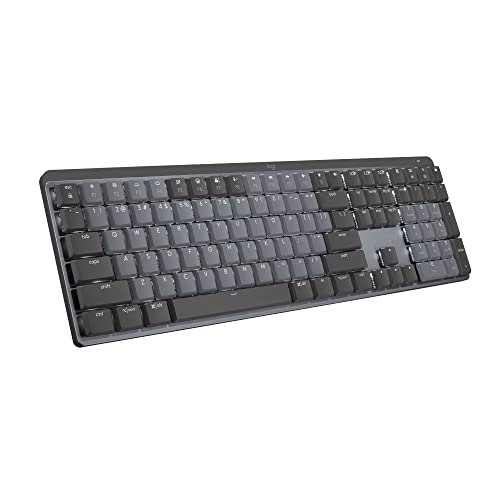


1. Connectivity: Wired vs. The 4KHz Wireless Revolution
For years, the dogma was simple: wired is king because it has zero latency. In 2026, that line has blurred significantly. While a high-quality USB-C cable remains the gold standard for absolute minimal latency, the wireless landscape has shifted. We are now seeing 4KHz polling rates becoming accessible in mid-range boards. A 4KHz polling rate means the keyboard reports its position to your PC 4,000 times per second, reducing the interval between key press and registration to 0.25ms. Compare that to the standard 125Hz (8ms) or even 1000Hz (1ms) found in older "wireless" boards, and the difference in responsiveness is palpable during rapid strafing in Valorant or CS2.
However, you must check your mouse and monitor support. A 4KHz keyboard requires a USB 3.0+ port and a receiver that can handle the bandwidth. If you are running a 240Hz or 360Hz monitor, you want to ensure your entire input chain is synchronized. If you are on a budget, a wired board with a 1000Hz polling rate is still vastly superior to a cheap wireless board with 125Hz polling. Don't pay a premium for "wireless" if the specs don't support high-frequency polling. The latency difference between 1000Hz wired and 4KHz wireless is negligible for 99% of players, but the difference between 1000Hz wired and 125Hz wireless is massive.
2. Switch Mechanics: Linear, Tactile, and Clicky Explained
The switch is the heart of your keyboard, and choosing the wrong one will fight against your muscle memory. In competitive FPS titles, linear switches (like Cherry MX Red, Gateron Yellow, or the newer Hall Effect magnetic switches) are the undisputed kings. They have no bump and no click, allowing for the fastest possible actuation and reset. When you are double-tapping 'W' to counter-strafe or mashing 'R' to reload, a linear switch offers the smoothest travel with the least amount of physical resistance.
For MMO and MOBA players, tactile switches (like Cherry MX Brown) might feel more natural because the bump confirms the actuation without needing to bottom out. This can reduce finger fatigue during long raid sessions. However, even in MMOs, many pros are switching to linear switches with lighter actuation forces (40-45g) to ensure rapid ability chaining. Clicky switches (like Blue switches) are generally discouraged for competitive gaming due to the noise and the extra travel distance required to register the click, which can slow down rapid inputs. Stick to linear for speed, tactile for feedback, and avoid clicky unless you are typing code all day and gaming at night.
3. Form Factors and Ergonomics: The 60% vs. TKL Debate
Space is a premium in competitive gaming. The debate between 60%, 65%, and Tenkeyless (TKL) keyboards is not about aesthetics; it's about mouse space and arm posture. A TKL (87-key) keyboard leaves the numpad off, giving you more room to swing your mouse for low-DPI tracking in Counter-Strike or Apex Legends. A 60% (61-key) keyboard takes this further, removing the function row and arrow keys, which are often mapped to macros or unused in many games. This maximizes your desk real estate, allowing for a wider mousepad and a more relaxed arm position.
However, removing arrow keys and F-keys can be a hindrance in MMOs or strategy games where you need quick access to these keys. If you play a mix of genres, a 65% or 75% layout is the sweet spot. It retains the arrow keys and a condensed function row while still saving significant desk space. Ergonomically, ensure the keyboard has a low profile or includes adjustable feet. A keyboard that forces your wrists into an extreme upward angle can lead to carpal tunnel over time, killing your gaming career faster than any bad match. Your wrists should be neutral, not bent.
4. Build Quality: Gasket Mounts, PBT, and PCB Stiffness
Build quality affects both durability and sound, which indirectly impacts your focus. In 2026, gasket-mounted keyboards are the standard for premium boards. Unlike tray-mounted boards where the PCB is screwed directly to the case, gasket mounts use rubber bands or foam to suspend the PCB. This isolates the typing noise, reduces vibration, and provides a softer, more consistent feel when bottoming out. For a gamer, this means less hand fatigue during marathon sessions and a more "premium" tactile feedback that can improve typing accuracy.
Keycap material is non-negotiable. Avoid ABS keycaps, which develop a shiny, slippery surface over time (the "finger oil shine") that reduces friction and control. Always choose PBT (Polybutylene Terephthalate) keycaps. They are rougher, more durable, and resistant to shine. Additionally, look for double-shot or dye-sublimated legends. If the legends are printed, they will fade after months of heavy WASD and ability key usage. A keyboard that looks worn out is a distraction. Stiffness of the case also matters; a flimsy plastic case can flex under pressure, leading to inconsistent key feel. Metal cases or thick ABS plastic cases are preferable for stability.
5. Software and On-Board Memory: Stop Relying on Cloud Profiles
Software bloat is the enemy of performance. A good gaming keyboard should have robust on-board memory. This allows you to save your macros, RGB lighting profiles, and key remaps directly to the keyboard's internal storage. When you plug the keyboard into a different PC (like at a LAN party or a friend's house), your settings follow you instantly. If you rely on cloud software that requires an active internet connection and a running background process, you risk input lag or lost settings if the software crashes or the internet drops.
Furthermore, minimize the background processes your keyboard software runs. Many RGB suites consume significant CPU and GPU resources, which can lead to micro-stutters in CPU-bound games. Look for keyboards that offer "hardware macro" support, where the key press is registered directly by the keyboard's microcontroller, not by a software script running on your OS. This ensures that your macros are executed with the same priority and speed as a physical key press, eliminating any software-induced latency.
Frequently Asked Questions
Do I need a 4KHz polling rate keyboard?
For most gamers, 1000Hz is sufficient. However, if you are a competitive FPS player using a 240Hz+ monitor and want to eliminate every possible millisecond of input delay, 4KHz is the future. It requires a compatible USB receiver and port.
Are Hall Effect switches better than mechanical?
They offer superior durability (no physical contact wear) and adjustable actuation points, which is great for competitive gaming. However, they are currently more expensive and can sometimes have slightly less consistent tactile feel compared to high-end mechanical switches.
What is the best switch for FPS games?
Linear switches are generally preferred because they allow for the fastest actuation and reset without the interruption of a tactile bump. Lighter actuation forces (40-45g) are also beneficial for rapid tapping.
Should I buy a wired or wireless keyboard?
Wired is still the most reliable and latency-free option. However, modern 2.4GHz wireless keyboards with 1000Hz+ polling rates are virtually indistinguishable in performance from wired, offering more desk flexibility.
What is the difference between PBT and ABS keycaps?
PBT keycaps are thicker, rougher, and more durable, resisting shine and wear over time. ABS keycaps are thinner, smoother, and tend to develop a shiny, slippery surface quickly, which can affect your typing grip.
Is a 60% keyboard good for gaming?
Yes, it maximizes mouse space for low-DPI gamers. However, you lose arrow keys and F-keys, which may be necessary for MMOs or strategy games. A 65% or TKL layout is a better compromise for mixed gaming.
Conclusion
Choosing the right mechanical keyboard in 2026 is about balancing latency, tactile feedback, and build quality to suit your specific gaming needs. Whether you are chasing the absolute lowest input lag with a 4KHz wireless board or prioritizing comfort with a gasket-mounted TKL, the key is to avoid gimmicks and focus on performance metrics. Invest in a board with hot-swappable switches and PBT keycaps to ensure it lasts through years of intense gaming. Once you have your keyboard dialed in, move on to optimizing your mouse DPI and monitor refresh rate to complete your competitive edge.


