

What Gaming Peripheral Should You Buy Next Quiz
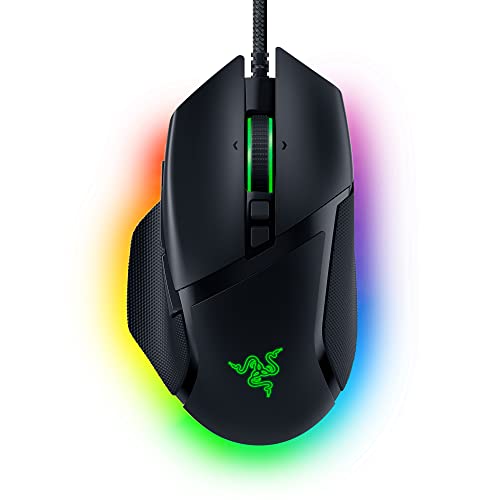
For competitive FPS players, the mouse is the single peripheral most directly correlated with aim performance. The gap between a budget gaming mouse and a flagship in 2026 comes down to three things: sensor quality (optical sensors with no prediction/smoothing are the standard), weight (lighter mice reduce fatigue and allow faster flicks without resistance), and click latency (top wireless mice now have lower latency than most wired mice). If your current mouse has smoothing, hardware acceleration, or imprecise tracking at high speeds, upgrading will have an immediately noticeable effect.
Table of Contents
- Our Top Picks
- What type of games do you play most?
- What's your biggest frustration with your current setup?
- How many hours per day do you typically play?
- What's your current mouse setup?
- What's your budget for this upgrade?
- 🖱️ Your Pick: Gaming Mouse — The Most Impactful FPS Upgrade
- ⌨️ Your Pick: Mechanical Keyboard — Feel the Difference Immediately
- 🎧 Your Pick: Gaming Headset — Hear Footsteps, Sound Clear
- 🖥️ Your Pick: Gaming Monitor — High Refresh Rate Changes Everything
- Frequently Asked Questions
Our Top Picks
Affiliate disclosure: if you buy through these links, we may earn a commission at no extra cost to you.


What type of games do you play most?
What's your biggest frustration with your current setup?
How many hours per day do you typically play?
What's your current mouse setup?
What's your budget for this upgrade?
🖱️ Your Pick: Gaming Mouse — The Most Impactful FPS Upgrade
Best Value: Logitech G Pro X Superlight 2 ($159) — 60g, HERO 2 Sensor, Wireless
The Logitech G Pro X Superlight 2 is the most used wireless gaming mouse in professional esports — 60 grams (one of the lightest wireless mice available), the HERO 2 sensor (25,600 DPI max, zero smoothing, zero acceleration, zero filtering at any DPI), LIGHTSPEED wireless with 1ms polling (faster than most wired competitors), 95-hour battery life, and 5 programmable buttons. The Superlight 2 is used by professional players across Valorant, CS2, and Apex because it delivers zero-compromise performance at a weight that eliminates the "heavy mouse" fatigue factor in long sessions. At $159, it's the flagship recommendation for competitive players who want the best available without custom sensor tuning.
Best Budget: Logitech G305 ($39) — Wireless, HERO Sensor, Under $40
The Logitech G305 is the best competitive gaming mouse under $50 — the same HERO sensor as higher-priced Logitech mice (zero smoothing/acceleration), LIGHTSPEED wireless at 1ms polling, 250-hour battery life from a single AA battery, and a compact shape that suits claw and fingertip grip styles. At $39, the G305 delivers sensor performance that matches mice at 3× the price. The trade-off vs the Superlight 2 is weight (99g vs 60g) and build quality (plastic feels budget). For players upgrading from a basic bundled mouse, the G305 is a dramatic performance improvement at an honest price.
📖 Read our gaming mouse comparison guide →
⌨️ Your Pick: Mechanical Keyboard — Feel the Difference Immediately
The difference between a membrane keyboard and a mechanical keyboard is tactile and audible on the first keystroke. Mechanical switches have a defined actuation point, consistent reset distance, and a physical mechanism that provides feedback your fingers can feel — which means faster, more accurate keystrokes with less bottoming-out fatigue. For both competitive gaming (consistent WASD response) and heavy typing (reduced fatigue over long sessions), mechanical switches are objectively better. The remaining choice is which switch type matches your feel preference: clicky, tactile, or linear.
Best Tenkeyless: Keychron Q3 Pro ($129) — QMK/VIA, Gasket Mount, Hot-Swap
The Keychron Q3 Pro is the most recommended enthusiast tenkeyless mechanical keyboard for gamers who also value typing quality — a QMK/VIA programmable layout (fully remappable, macro support), a gasket-mounted plate (absorbs typing force, significantly reduces harsh clack vs tray-mounted boards), hot-swappable switch sockets (change switches without soldering), an aluminum frame, and RGB backlight. The Q3 Pro comes with Gateron G Pro switches in Red, Brown, or Blue. At $129, it builds to a typing quality standard that custom keyboard builders spend $300+ to match with comparable components. The gasket mount difference is immediately noticeable vs budget boards.
Best Budget 75%: Keychron K2 Pro ($99) — Compact, Wireless, Hot-Swap
The Keychron K2 Pro is the most recommended entry-point mechanical keyboard for gamers — a 75% layout (full navigation cluster, no numpad, compact footprint), Bluetooth 5.1 wireless + USB-C wired, hot-swappable switches (choose Red/Brown/Blue), RGB backlight, and Mac/Windows compatibility. At $99, the K2 Pro is the correct starting point for anyone switching from membrane to mechanical for the first time — the hot-swap feature means you can change switch types if your first choice isn't the right feel, without buying a new board.
📖 Read our mechanical keyboard buying guide →
🎧 Your Pick: Gaming Headset — Hear Footsteps, Sound Clear
In competitive FPS, audio is a competitive advantage — hearing footsteps, reload sounds, and directional audio cues before you have visual confirmation is a skill that good audio hardware enables and bad hardware prevents. The distinction between a gaming headset and good audio hardware is positional accuracy (7.1 virtual surround vs stereo), microphone quality (flat response vs aggressively boosted frequencies), and driver quality (how accurately the headphones reproduce positional cues). Cheap gaming headsets often boost bass and treble at the expense of the mid frequencies where footsteps and voice live.
Best Wireless: SteelSeries Arctis Nova 7 ($149) — 38-Hour Battery, Simultaneous Dual Wireless
The SteelSeries Arctis Nova 7 is the most recommended wireless gaming headset for competitive players — simultaneous 2.4GHz + Bluetooth connectivity (game audio on 2.4GHz, voice chat on Bluetooth simultaneously — no switching), a 38-hour battery life, the Sonar software EQ with pre-made competitive profiles that boost footstep frequencies, a retractable ClearCast microphone with noise cancellation, and a steel-reinforced headband. At $149, the Nova 7's simultaneous dual wireless is the feature most competitors don't offer at any price — it lets you take Discord calls on your phone while gaming without disconnecting. For streamers and competitive players, this solves the audio routing complexity that single-device headsets create.
Best Wired Budget: HyperX Cloud II ($79) — The Competitive Standard Under $80
The HyperX Cloud II is the most recommended budget competitive gaming headset — 53mm drivers tuned for competitive audio (footstep and voice frequencies emphasized over bass), virtual 7.1 surround via included USB sound card, a detachable noise-cancelling microphone, memory foam ear cushions, and a steel frame. At $79, the Cloud II delivers positional audio accuracy that competing headsets at $120–$150 don't measurably improve. The Cloud II is the headset that CS:GO/CS2 community recommends as the performance-per-dollar standard. The microphone quality is adequate for team communication but not for streaming.
🖥️ Your Pick: Gaming Monitor — High Refresh Rate Changes Everything
If you're gaming at 144Hz or below and playing competitive games, upgrading to 240Hz+ is the most impactful hardware upgrade available — assuming your GPU can push the frame rates. The visual difference between 60Hz and 144Hz is immediately apparent to any player. The difference between 144Hz and 240Hz is more subtle but measurable in competitive reaction time tests. Response time (1ms GtG vs 4ms) determines how much motion blur you see during fast movement — 1ms IPS panels now match TN panels without the color trade-off.
Best 1080p 240Hz: ASUS TUF Gaming VG259QM ($249) — 280Hz OC, 1ms, IPS
The ASUS TUF Gaming VG259QM is the most recommended 1080p competitive gaming monitor — a 24.5" Fast IPS panel with 280Hz overclock capability (native 240Hz), 1ms GtG response time, ELMB Sync (motion blur reduction while G-Sync compatible), DisplayHDR 400, and a 99% sRGB color gamut. At $249, the VG259QM delivers the display performance that professional CS2 and Valorant players use (24.5" is the competitive standard size — fits the full FOV without requiring head movement). Fast IPS gives you 1ms response without the washed-out colors of TN panels, and 280Hz OC is the headroom for players who push high frame rates consistently.
Best 1440p 165Hz: LG 27GP850-B ($279) — 1ms NanoIPS, Crisp and Fast
The LG 27GP850-B is the most recommended 1440p gaming monitor for players wanting a balance of image quality and competitive performance — a 27" Nano IPS panel at 2560×1440 (significantly sharper than 1080p, appropriate for RPG and open-world games), 165Hz refresh rate (overclockable to 180Hz), 1ms GtG, G-Sync compatible + FreeSync Premium, and LG's wide color gamut coverage. At $279, the 27GP850-B is the correct monitor for players who split time between competitive games and visually rich single-player titles — the 1440p resolution makes a dramatic difference in open-world and RPG games compared to 1080p, while 165Hz maintains competitive performance.
FrameRateHQ.com participates in the Amazon Associates program and earns commissions on qualifying purchases at no extra cost to you.
Frequently Asked Questions
How do I choose the right gaming peripheral for my setup?
The best approach is to identify your specific bottleneck rather than chasing the latest trending gear—for example, upgrading to a 1000Hz polling rate mouse won't help if your monitor only runs at 60Hz. Consider your gaming style, current frustrations with your setup, and play time to prioritize which peripheral will have the biggest impact on your experience, whether that's a mechanical keyboard, gaming headset, or monitor upgrade.
What is the best gaming mouse for competitive play?
A competitive gaming mouse should match your monitor's refresh rate capability and your gameplay needs; a high polling rate mouse is only beneficial if paired with a high refresh rate monitor. Look for features like low latency, ergonomic design for your grip style, and reliable sensor technology rather than focusing solely on specifications like DPI or polling rate.
Is it worth upgrading to a mechanical keyboard for gaming?
A mechanical keyboard upgrade can improve your gaming experience through better tactile feedback and durability, but it won't directly improve your aim or reaction time. The value depends on your current setup and how many hours you play daily—heavy gamers may benefit more from the comfort and responsiveness than casual players.
How do I know if I need a better gaming monitor?
If you're experiencing lag, motion blur, or input delay during gameplay, a higher refresh rate monitor might be your bottleneck—pairing a high-end mouse or keyboard with a 60Hz monitor will limit your performance gains. Evaluate your current monitor's refresh rate and response time against your GPU's capability to determine if an upgrade would meaningfully impact your gaming performance.
What gaming peripherals should I prioritize if I stream?
Streaming setup priorities differ from pure gaming—you'll want to invest in a quality streaming microphone, webcam, and capture card alongside your gaming peripherals. Balance your budget between gaming performance peripherals (mouse, keyboard, monitor) and streaming equipment (microphone, camera, lighting) based on whether your audience values gameplay quality or streamer presence more.
How many hours of daily gaming justify a peripheral upgrade?
Heavy gamers (4+ hours daily) see more benefit from ergonomic and performance upgrades like gaming chairs, mechanical keyboards, and high-refresh monitors due to comfort and long-session demands. Casual gamers (1-2 hours daily) may find smaller upgrades like mouse pads or RGB lighting sufficient, while mid-level players should focus on addressing specific frustrations in their current setup.


