

Aoc Gaming Monitors vs Asus Gaming Monitors: Which Should You Buy in 2026
When you’re locked in a clutch round of Valorant or grinding ranked in Apex Legends, your monitor isn’t just a screen—it’s your competitive edge. The difference between a crisp, buttery-smooth 240Hz OLED and a laggy, color-faded panel can mean the difference between a headshot and a respawn. That’s why choosing between AOC Gaming Monitors and Asus Gaming Monitors isn’t just about picking a display; it’s about defining your setup’s performance ceiling. Whether you’re a pro-level FPS competitor chasing every millisecond of input lag reduction or a streaming MMO enthusiast needing color accuracy and screen real estate, this breakdown cuts through the marketing noise to tell you exactly which brand delivers the specs that matter.
This comparison is for gamers who refuse to compromise on performance but need to know where to draw the line between budget-friendly value and premium, feature-rich engineering. We’ll break down the raw data—refresh rates, response times, panel technologies, and adaptive sync capabilities—to help you decide if AOC’s value-oriented approach or Asus’s performance-first ROG and TUF ecosystems is the right fit for your 2026 setup. No fluff, just the facts you need to optimize your frame times and visual clarity.
Affiliate disclosure: if you buy through these links, we may earn a commission at no extra cost to you.
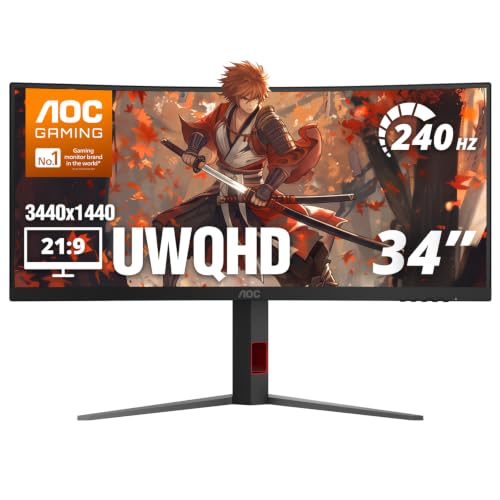
Table of Contents
- Models in this comparison
- Quick Verdict
- About Aoc Gaming Monitors
- About Asus Gaming Monitors
- Head-to-Head: Refresh Rates and Response Times
- Head-to-Head: Panel Technology and Color Accuracy
- Head-to-Head: Ergonomics and Build Quality
- Who Should Choose Aoc Gaming Monitors?
- Who Should Choose Asus Gaming Monitors?
- Our Verdict
- Frequently Asked Questions
- Sources & References
Models in this comparison
Affiliate disclosure: if you buy through these links, we may earn a commission at no extra cost to you.


Quick Verdict
Choose Aoc Gaming Monitors if...
- You need high refresh rates (144Hz–240Hz) and solid gaming specs without paying a premium brand tax.
- Your priority is value for money, making AOC the better choice for dependable everyday visuals and productivity.
- You are looking for budget-friendly options that still deliver essential features like HDR10 support and competitive panel types (IPS, VA, TN).
Choose Asus Gaming Monitors if...
- You demand the fastest route to gaming responsiveness, including ultra-high refresh rates (up to 360Hz) and ultra-low response times (0.03ms).
- You want premium technologies like OLED panels, advanced adaptive sync (G-SYNC compatibility), and superior color accuracy for creatives.
- You prioritize ergonomic designs with pivot and height adjustments, and you are willing to invest in top-tier build quality and innovation.
| Factor | Aoc Gaming Monitors | Asus Gaming Monitors |
|---|---|---|
| Relative Cost | Value-oriented; emphasizes practical specs and lower prices for work and general use. | Premium pricing; focuses on performance-first designs with advanced technologies like OLED and high-end ergonomic builds. |
| Best For | Gamers prioritizing performance-per-dollar, productivity, and everyday visuals with solid specs like 144Hz. | Competitive FPS players and creatives demanding high-refresh responsiveness (240Hz+), low input lag, and color accuracy (99% DCI-P3). |
| Setup Difficulty | Plug-and-play simplicity with essential gaming features like FreeSync Premium. | May require calibration for premium features like OLED Care Pro and advanced adaptive sync technologies. |
| Reliability | Dependable everyday visuals with standard panel types (IPS, VA, TN) at competitive price points. | Frontier incorporation of new technologies with robust build quality and superior color accuracy for professional use. |
| Key Advantage | Excellent performance-per-dollar, offering high refresh rates (144Hz-240Hz) and HDR10 support without premium brand taxes. | Unmatched gaming responsiveness with features like 0.03ms response times, 360Hz refresh rates, and G-SYNC compatibility. |
| Main Drawback | Lacks the premium feature set and cutting-edge panel technologies found in higher-end competitors. | Higher cost entry point for advanced features like OLED panels and ergonomic pivots. |
About Aoc Gaming Monitors
AOC has carved out a serious niche for gamers who want high-performance specs without the premium brand tax. Their lineup is typically value-oriented, emphasizing practical specs and lower price points for both work and general gaming use. You’ll find AOC monitors utilizing a mix of IPS, VA, and TN panel types, offering resolutions from 1080p to 4K UHD at competitive costs. For the competitive FPS player on a budget, AOC delivers essential gaming features like FreeSync Premium and high refresh rates (144Hz-240Hz) that keep your aim smooth and your input lag low. When you look at models like the AOC 27" Gaming Monitor QHD 240Hz QD OLED or the 34" Curved UWQHD 240Hz VA, you’re getting a lot of screen real estate and speed for your money. AOC monitors commonly support HDR10, providing a decent contrast boost for immersive titles. If your primary "job" is dependable everyday visuals and solid gaming specs without breaking the bank, AOC offers excellent performance-per-dollar. They are the go-to for gamers who need a reliable display that handles fast-paced action without forcing them to choose between a good monitor and buying a new GPU.About Asus Gaming Monitors
ASUS, particularly through its ROG (Republic of Gamers) line, focuses on performance-first designs that cater to the most demanding competitive gamers and content creators. Their monitors are frequently at the forefront of incorporating new technologies, emphasizing high refresh rates, adaptive sync, and ultra-low input lag. ASUS ROG monitors feature advanced technologies like 240Hz+ refresh rates, 0.03ms response times, and OLED panels with 99% DCI-P3 color gamut, ensuring that every pixel reacts instantly and looks vibrant. For the pro player or streamer who needs color accuracy and premium ergonomics, ASUS delivers. Their higher-end models often support HDR400 or higher and include superior color accuracy for creatives, along with ergonomic designs that offer pivot and height adjustments. Whether it’s the ASUS ROG PG32UCDP 32 Inch 4K 240Hz OLED or the ROG Strix 26.5” 1440P QD-OLED, ASUS monitors are built for those who prioritize gaming responsiveness and premium features. If you need the fastest route to competitive advantage with cutting-edge panel tech, ASUS is the clear winner.Head-to-Head: Refresh Rates and Response Times
When you are locked in a competitive FPS like Valorant or CS2, every millisecond counts. ASUS generally focuses on performance-first designs, emphasizing the highest possible refresh rates and lowest input lag for gaming. Their ROG Swift lineup can feature refresh rates up to 360Hz with response times as low as 0.03ms, which is critical for tracking fast-moving targets and minimizing motion blur. This makes ASUS the clear winner if your primary "job" is high-refresh gaming responsiveness. AOC monitors, on the other hand, are typically value-oriented, emphasizing practical specs and lower prices. While AOC offers solid gaming features like FreeSync Premium and high refresh rates ranging from 144Hz to 240Hz, they often sit at the budget-friendly end of the spectrum. For example, in mid-range comparisons, AOC models commonly support 144Hz refresh rates with 4ms response times. If you are playing MMOs or slower-paced games where extreme pixel-perfect tracking matters less, AOC provides excellent performance-per-dollar without the premium brand tax.Head-to-Head: Panel Technology and Color Accuracy
For gamers who also stream or create content, panel quality is non-negotiable. ASUS monitors are frequently at the forefront of incorporating new technologies, offering superior color accuracy and advanced panel types. High-end ASUS ROG models often utilize QD-OLED or Glossy OLED panels with 99% DCI-P3 color gamut coverage and DisplayHDR 400 or higher certification. This ensures that your game visuals pop with vibrant colors and deep blacks, which is essential for both competitive immersion and content creation. AOC monitors provide a wide range of resolutions and panel types, including IPS, VA, and TN, catering to various budget levels. They commonly support HDR10, which is a solid baseline for general gaming and productivity. While AOC delivers dependable everyday visuals and solid color reproduction for the price, they generally do not match the cutting-edge color fidelity and contrast ratios found in ASUS’s premium OLED offerings. If you need a monitor that doubles as a creative tool, ASUS’s focus on color-critical work gives them the edge.Head-to-Head: Ergonomics and Build Quality
Your setup longevity and comfort matter just as much as the pixels on the screen. ASUS monitors frequently include premium ergonomic designs, such as pivot, height adjustment, and swivel capabilities, allowing you to fine-tune your viewing angle for long streaming sessions or competitive matches. This attention to build quality and user interface reflects ASUS’s positioning at the forefront of advanced technology integration for professional gamers and creatives. AOC monitors tend to prioritize function over form in the premium sense, offering essential gaming features at competitive price points. While many AOC models do include basic ergonomics like tilt and swivel, they often lack the full range of motion found in ASUS’s higher-end lines. For users who prioritize value for money and need dependable visuals for work and general use, AOC’s construction is sufficient. However, if you are investing in a flagship setup where adjustability and durability are key, ASUS delivers a more robust package.Who Should Choose Aoc Gaming Monitors?
If you are grinding ranked matches in a competitive FPS but your wallet is screaming for mercy, AOC is your squad. AOC monitors are the ultimate value play for gamers who need solid performance without the premium brand tax. You should choose AOC if you prioritize performance-per-dollar, needing dependable everyday visuals and solid gaming specs like 144Hz or 240Hz refresh rates at budget-friendly costs. AOC typically utilizes IPS, VA, and TN panel types, offering resolutions from 1080p to 4K UHD that hit the sweet spot for general use and productivity. If you are a streamer or content creator on a tight budget who still wants HDR10 support and high refresh rates for smooth gameplay, AOC delivers the essentials without overcomplicating the feature set. It is the smart buy for gamers who want to allocate more budget to their GPU or CPU while still enjoying a fluid, responsive display.
Who Should Choose Asus Gaming Monitors?
For the competitive elitist who refuses to compromise on input lag or color accuracy, ASUS is the non-negotiable choice. You should choose ASUS if your primary need is high-refresh gaming responsiveness and premium features like OLED panels and advanced adaptive sync technologies. ASUS ROG monitors are engineered for performance-first designs, emphasizing 240Hz+ refresh rates, 0.03ms response times, and 99% DCI-P3 color gamuts that make every pixel pop in both FPS and MMO scenarios. If you are a pro gamer needing the fastest route to victory with G-SYNC compatibility and superior ergonomic designs (pivot, height adjust), or a creative professional demanding color-critical accuracy, ASUS sits at the forefront of incorporating new technologies. When you need the absolute best in smooth motion, low input lag, and build quality, and budget is secondary to performance, ASUS is the winner.
Our Verdict
Look, if you are grinding ranked matches in a competitive FPS or streaming your gameplay with zero compromise, the answer is straightforward: **Asus** is the play. Specifically, their ROG (Republic of Gamers) lineup. When you are talking about input lag, refresh rates, and panel technology, Asus is operating in a different tier. We are seeing specs like 360Hz refresh rates and 0.03ms response times in their Swift series, which is critical when every millisecond counts in a clutch round. If you want that premium OLED experience with 99% DCI-P3 color accuracy and advanced adaptive sync technologies, Asus is the only brand delivering that performance-first architecture.
However, if you are on a tight budget or you are building a secondary setup for productivity and casual gaming, **AOC** is the smart value pick. They aren't trying to sell you the latest bleeding-edge tech; they are giving you solid 144Hz to 240Hz options with FreeSync Premium at a price point that makes sense for the average gamer. You get dependable everyday visuals and solid gaming specs without the "premium brand tax." If your primary "job" is work, streaming on a budget, or just wanting a big screen for MMOs without breaking the bank, AOC offers the best performance-per-dollar.
So, here is the bottom line: Buy **Asus** if you need the fastest route to gaming responsiveness and premium features like high-end OLED panels. Buy **AOC** if you prioritize value for money and need a reliable display for general use and solid gaming performance. Don't overpay for features you won't use, but don't undersell yourself if you are chasing that competitive edge.
Frequently Asked Questions
Is an ASUS monitor actually worth the extra cost over AOC for competitive FPS?
If you are grinding ranked matches in titles like Valorant or CS2, the answer is often yes. ASUS ROG monitors frequently push refresh rates to 240Hz, 360Hz, and beyond with response times as low as 0.03ms. For a competitive gamer, that extra smoothness and reduced input lag can be the difference between a headshot and a miss. AOC offers solid 144Hz-240Hz options at a lower price point, but if your priority is absolute performance responsiveness and premium features like OLED panels, ASUS is the stronger play.
Can I use an AOC monitor for productivity and general use without feeling like I'm compromising?
Absolutely. AOC monitors are typically value-oriented, emphasizing practical specs and dependable everyday visuals. If your "job" involves a mix of work, streaming, and casual gaming, AOC provides excellent performance-per-dollar. You get essential gaming features like FreeSync Premium and high refresh rates without paying the "premium brand tax" associated with ASUS's high-end ROG line.
What's the real difference between HDR10 on AOC and HDR400 on ASUS?
The difference lies in brightness and contrast performance. While AOC monitors commonly support HDR10, offering decent color vibrancy for the price, higher-end ASUS models often support HDR400 or higher. This means ASUS displays can get significantly brighter and handle high-contrast scenes more effectively, which is crucial for immersive gaming and content creation. If you need color accuracy and dynamic range for creative work, ASUS's advanced panel technologies generally hold the edge.
Are ASUS monitors better for creatives than AOC?
For color-critical work, ASUS tends to lead the pack. ASUS monitors are frequently positioned at the forefront of incorporating new technologies, offering superior color accuracy (often 99% DCI-P3) and ergonomic designs like pivot and height adjustment. While AOC offers good color reproduction with IPS panels, ASUS's focus on performance-first designs and premium build quality makes it the preferred choice for professionals who need both gaming responsiveness and creative precision.
Which brand should I choose if I'm on a tight budget?
If you prioritize value for money and need dependable visuals for general use or entry-level gaming, AOC is the smarter buy. They offer solid specs like 144Hz refresh rates and QHD resolutions at budget-friendly costs. However, if you can stretch your budget for a monitor that will last longer and offer better long-term performance with features like G-SYNC compatibility and advanced adaptive sync, ASUS provides a more future-proof investment.


