

Gaming Chairs Vs Mechanical Keyboards
You’re looking to level up your setup, but you’re facing a classic dilemma: do you invest in the seat that holds you through a twelve-hour grind, or the input device that determines whether you hit that frame-perfect window? It’s the battle of physical endurance versus technical precision. In 2026, the cost of high-end peripherals is higher than ever, and deciding where to drop your hard-earned cash requires understanding the difference between comfort-driven longevity and performance-driven edge.
This isn't an apples-to-apples comparison in terms of hardware—one is a piece of furniture, the other is a precision input tool. However, they both occupy the same critical space in a competitive setup. One manages your physical health and focus, while the other manages your latency and input reliability. If you're deciding which to prioritize for your next upgrade, here is the breakdown of how these two investments impact your gaming life.
Affiliate disclosure: if you buy through these links, we may earn a commission at no extra cost to you.
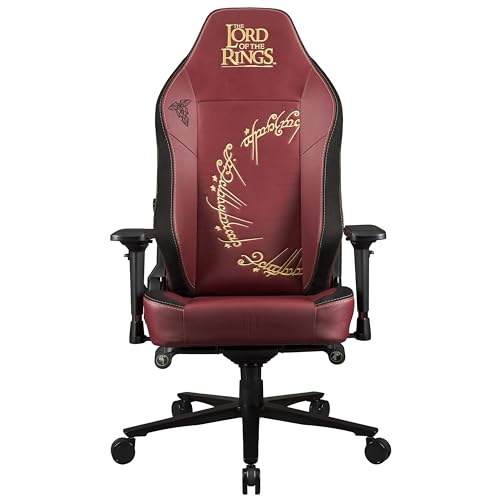


Table of Contents
Models in this comparison
Affiliate disclosure: if you buy through these links, we may earn a commission at no extra cost to you.
Quick Verdict
Choose Gaming Chairs if...
- You suffer from back pain or fatigue during long sessions.
- Your current seating is a non-ergonomic kitchen chair or office chair.
- You want to prioritize physical health and long-term comfort.
Choose Mechanical Keyboards if...
- You play competitive FPS or rhythm games where latency matters.
- You need reliable N-key rollover for complex key combos.
- You want a direct, measurable impact on input consistency.
| Factor | Gaming Chairs | Mechanical Keyboards |
|---|---|---|
| Primary Benefit | Physical comfort & ergonomics | Input speed & precision |
| Performance Impact | Indirect (focus/stamina) | Direct (latency/actuation) |
| Setup Difficulty | Moderate (Assembly required) | |
| Longevity Factor | Material wear/ergonomic support | Switch life/durability |
| Key Advantage | Reduced physical fatigue | Faster response times |
| Main Drawback | Does not improve aim/skill | Does not improve physical comfort |
About Gaming Chairs
A gaming chair is an investment in your physical ability to stay in the game. When you're deep in a ranked ladder climb, physical discomfort is a silent killer of focus. A high-quality chair aims to provide ergonomic support that keeps your posture aligned, reducing the risk of fatigue-induced mistakes. While marketing often focuses on the "gamer aesthetic," the real value lies in the build quality—lumbar support, seat density, and adjustable armrests.
It is important to be honest: a premium chair will not make your aim better or your reaction time faster. It is a support system. If you are sitting in a chair that causes back pain, your focus shifts from the monitor to your spine, which is a massive distraction during high-stakes matches. However, if you already have a decent chair, spending $500 on a new one might not yield the same "feel" of improvement that a new keyboard will.
About Mechanical Keyboards
Mechanical keyboards are about the direct interface between your intent and the game engine. Unlike membrane keyboards, mechanical switches offer consistent actuation force and faster response times. For competitive players, features like N-key rollover (NKRO) are essential to ensure that complex, simultaneous inputs are registered correctly during intense combat. With the rise of Hall Effect technology, we are seeing even faster actuation speeds through magnetic switches, allowing for much tighter control over movement.
sIn the competitive scene, every millisecond counts. Whether it's the 45cN actuation force of a Cherry MX Red or the ultra-low latency of an 8000Hz polling rate, these specs are designed to remove the keyboard as a bottleneck. While a better keyboard won't magically grant you better game sense, it ensures that your hardware isn't the reason you lost a duel. It's about consistency: knowing that every press will feel exactly the same, every single time.
Head-to-Head: Performance Impact
The difference here is between indirect and direct performance. A gaming chair provides indirect performance. By managing your ergonomics, it helps you maintain focus and prevents the physical burnout that leads to sloppy play. It's about sustaining your peak performance over a six-hour session rather than a twenty-minute burst.
A mechanical keyboard provides direct performance. It affects the literal timing of your inputs. In games where movement or ability activation timing is critical, the actuation speed and the reliability of the switch can be the difference between a successful dodge and a death screen. If you are looking for a "performance boost" you can feel in your hands, the keyboard is the winner.
Head-to-Head: Longevity and Value
When looking at the lifespan of these products, they serve different purposes. A chair's longevity is tied to its structural integrity and the durability of its upholstery. A cheap chair might lose its foam density or ergonomic support within a year, making it useless for long sessions. It is a heavy, singular purchase that defines your workspace for years.
A mechanical keyboard's longevity is tied to its switches and build quality. With hot-swappable sockets, you can replace individual switches to extend the life of the board or change the feel entirely. While a keyboard is a much smaller physical footprint, its value is often measured in how many millions of keystrokes it can handle before failing. For many, the keyboard is a more frequent upgrade cycle than a chair.
Who Should Choose Gaming Chairs?
Choose a gaming chair if your current seating situation is actively causing you physical pain or if you spend more than 6 hours a day at your desk. If you are a streamer or a professional who needs to maintain a professional posture for long periods, ergonomics should be your priority. If your desk setup is already technically sound, the chair is your next logical step for health and comfort.
Who Should Choose Mechanical Keyboards?
Choose a mechanical keyboard if you are a competitive player looking to minimize input lag and maximize consistency. If you play titles where movement precision is king (like FPS or fighting games), the technical advantages of mechanical switches—like Hall Effect or specific actuation forces—are worth the investment. If you are currently using a membrane keyboard, this will be the most noticeable upgrade you can make.
Our Verdict
If you are forced to choose one, **buy the mechanical keyboard.**
In the world of competitive gaming, the keyboard is a tool of execution. It provides a measurable, technical advantage in terms of latency, actuation, and input reliability. While a chair is vital for your health, a keyboard is vital for your gameplay. If you have a functional chair, your priority should be upgrading your input devices to ensure your hardware isn't holding back your skill. Once your input lag is minimized and your keystrokes are consistent, then you can look toward your chair to sustain that performance over longer hours.
Frequently Asked Questions
Will a better keyboard improve my aim?
No. A keyboard won't improve your mouse own-aim, but it can improve your movement-based combat and ensure your inputs are registered without delay. It removes the technical bottleneck.
What is the importance of N-key rollover (NKRO)?
NKRO allows you to press multiple keys simultaneously without the keyboard "ghosting" or missing inputs. This is critical for complex gaming inputs where multiple keys must be registered at once.
Is a gaming chair better than an office chair?
Not necessarily. Many high-end office chairs offer better ergonomic support than "gaming" branded chairs. Look for ergonomics and build quality over flashy designs.
What should I look for in a mechanical switch?
Consider the actuation force (measured in cN) and the type of switch (linear, tactile, or clicky). For gaming, many prefer lighter linear switches for faster, smoother presses.


